Warding Off Wildfires
For many, a glimpse of sunshine can only mean one thing: BBQ season has arrived. Whether you’re spending the day at the beach or escaping to a campsite with marshmallows in tow, it’s worth asking: can we enjoy our BBQs and campfires while still protecting our coast?
What is a wildfire?
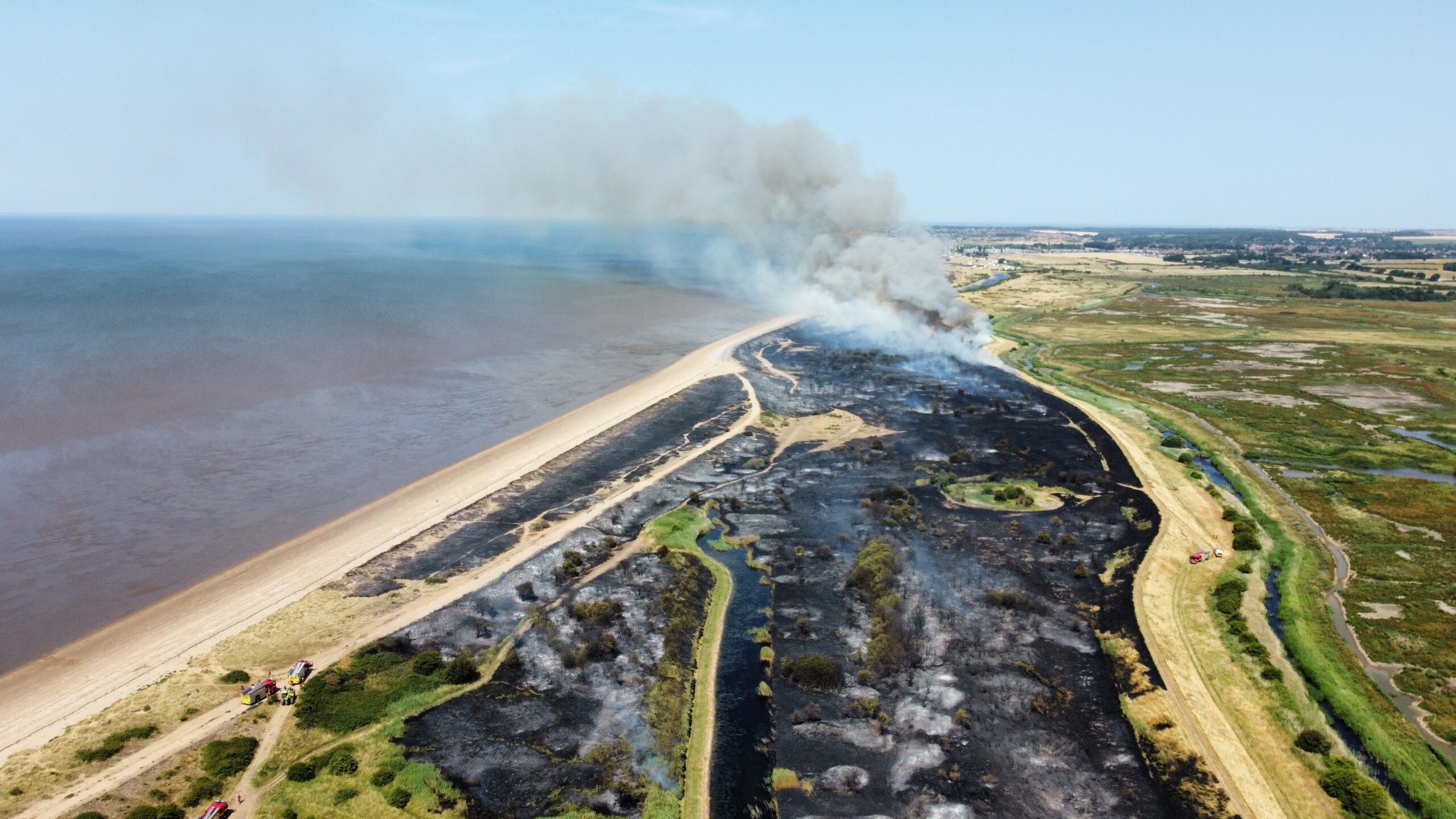
A wildfire is an uncontrolled vegetation fire that requires action to contain it. In many parts of the world, wildfires are a natural phenomenon. In the UK, however, the vast majority caused by human activity.
And they happen here, on our coast.
In 2022, a wildfire at Wild Ken Hill in north-west Norfolk destroyed 33 hectares of habitat, the equivalent of around 62 football pitches. Sadly, countless plants and significant numbers of animals and their habitats were lost in the flames. Our landscape is protected because of its incredible wildlife, and after a wildfire, it can take decades for the land to recover.
That’s why it’s so important that we all do our part to reduce the risk of wildfires on our coast. Here are three simple ways to help.
1. Always put litter in bins or take it home if the bins are full
We’ve all been there, trying to play a game of Jenga with overflowing public bins packed with fish and chip wrappers. But one gust of wind can have devastating consequences.
Litter fuels wildfires by providing highly combustible materials that can act as ignition points or accelerants, increasing both the speed and intensity of a fire.
If there isn’t enough room in the bin, the best thing you can do is take your rubbish home with you, including food waste.
2. Only light campfires or BBQs in designated areas and ensure they are fully extinguished
We’re not saying you should give up BBQs altogether, where’s the fun in that? What we do ask is that you only use them in designated areas, which you can find here.
The same applies to campfires. There are several coastal-friendly campsites across Norfolk where you can safely enjoy a campfire without putting wildlife and habitats at risk.
Before leaving, always make sure your BBQ or campfire is completely extinguished.
3. Follow fire safety guidance wherever you are
With more than 90 miles of coastline, different areas have different rules. Planning ahead helps protect wildlife and habitats, ensuring everyone can continue to enjoy these special places for years to come.
For more tips on how to care for our coast during your visit, check out our Know Before You Go page.